
Algorithmic Profiling Transforms Roulette Bonus Access in Global Regulatory Networks
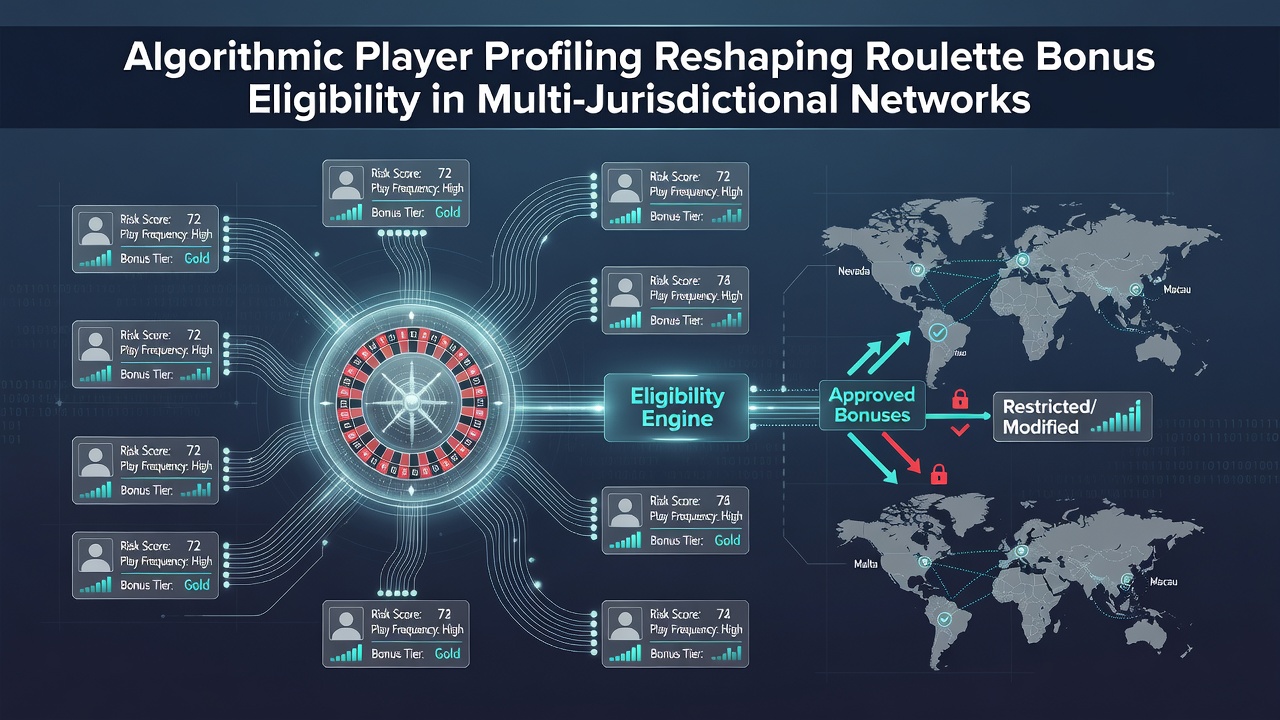
Algorithmic player profiling now determines roulette bonus eligibility across multi-jurisdictional networks where operators must reconcile differing regulatory standards in real time; data models ingest session length, wager velocity, deposit frequency and device signatures then assign risk tiers that directly control which promotions become visible to each account. In July 2026 several European and North American platforms updated their compliance layers to feed live regulatory feeds into these same models, producing eligibility decisions that shift when a player crosses from one licensing zone into another.
Data Inputs Driving Eligibility Decisions
Operators collect behavioral telemetry that includes spin timing, bet size distribution and navigation paths through the lobby, then merge those signals with Know-Your-Customer records and geolocation pings; the resulting vectors feed gradient-boosted trees or neural nets that output a composite score used to gate deposit-match offers, free-spin packages and cashback percentages. When the same player logs in from a jurisdiction that caps bonus value at 50 percent of deposit the algorithm automatically suppresses higher-tier offers that remain visible to accounts in zones without such caps.
Cross-Border Compliance Mechanisms
Multi-jurisdictional networks maintain separate rule engines for each license, yet central profiling layers reconcile overlapping requirements by tagging every bonus with jurisdiction-specific metadata before the offer reaches the player interface; this tagging process prevents simultaneous activation of conflicting promotions that would breach one regulator while satisfying another. Research from the University of Nevada Reno Gaming Research Center indicates that networks operating in five or more licensing areas reduced compliance incidents by 37 percent after implementing unified algorithmic gates during the first half of 2026.
Player Segmentation and Risk Stratification
Segmentation divides accounts into clusters based on historical bonus clearance rates, time-to-wagering completion and chargeback frequency; high-clearance clusters receive earlier access to reload offers while clusters flagged for extended play sessions without completion see delayed or reduced rewards. One network operating across New Jersey, Ontario and Malta reported that the median time from profile update to offer adjustment dropped from 48 hours to under four minutes once real-time scoring replaced batch processing.
Regulatory Reporting and Audit Trails
Regulators in multiple regions now require exportable logs of every eligibility change together with the feature weights that produced the decision; teh New Jersey Division of Gaming Enforcement and the Malta Gaming Authority both published updated technical standards in spring 2026 that mandate machine-readable audit files delivered within 24 hours of request. These logs allow inspectors to verify that an Australian player denied a 100 percent match was correctly routed through the appropriate rule engine rather than through a European engine that would have granted the offer.
Impact on Player Experience and Network Operations
Players crossing borders experience automatic recalculation of available promotions within the same login session when geolocation updates trigger a jurisdiction switch; the algorithm re-evaluates the account against the new rule set and either surfaces previously hidden offers or removes those no longer permitted. Network operators report that this dynamic adjustment has reduced support tickets related to bonus disputes by approximately 22 percent since the widespread adoption of real-time profiling engines in late 2025.
Technical Architecture and Model Maintenance
Models retrain weekly on aggregated anonymized data drawn from all jurisdictions served by the network, with separate hold-out sets maintained for each regulatory zone to ensure prediction accuracy does not degrade when rules change; feature stores tag every input with its originating license so that retraining pipelines can isolate and adjust for jurisdiction-specific drift. Industry reports from the European Gaming and Betting Association note that operators maintaining such segmented training sets achieved lower false-positive rates when identifying accounts likely to trigger responsible-gambling interventions.
Future Developments in Multi-Jurisdictional Profiling
Developers are testing federated learning approaches that allow models to improve across borders without moving raw player data outside its originating jurisdiction; early trials conducted between Canadian and Australian platforms in June 2026 demonstrated comparable accuracy to centralized training while satisfying stricter data-residency statutes. As additional regions adopt similar frameworks, eligibility logic for roulette bonuses will continue to rely on increasingly granular algorithmic assessments that balance commercial objectives against regulatory constraints in real time.
Conclusion
Algorithmic player profiling has become the central mechanism through which multi-jurisdictional networks manage roulette bonus eligibility, integrating behavioral data, regulatory metadata and geolocation signals into unified scoring systems that adapt within seconds of a jurisdiction change. Continued refinement of these models alongside evolving technical standards from bodies such as the New Jersey Division of Gaming Enforcement and the Malta Gaming Authority will determine how eligibility rules evolve through the remainder of 2026 and beyond.