
The Role of Session Timing in Meeting Roulette Bonus Conditions on International Platforms
Session timing plays a measurable role in how players clear roulette incentives across international gaming sites, and operators track these patterns through detailed analytics systems. Data from multiple platforms indicates that shorter, concentrated sessions often align with higher completion rates for wagering requirements when bonuses include daily or weekly caps, whereas extended play periods can dilute progress if time-based restrictions apply. Researchers who analyzed player logs from regulated markets discovered that sessions lasting between 45 and 90 minutes frequently coincide with optimal clearance speeds, particularly on European and Asian-facing sites that enforce strict playthrough windows.
Platform Data Patterns Across Regions
International operators in Canada and Australia have released aggregated reports showing that players who space sessions across multiple days meet clearance thresholds more consistently than those attempting single marathon efforts. According to figures compiled by the Malta Gaming Authority, time-stamped transaction records reveal that bonuses tied to roulette often reset or adjust at midnight UTC, which influences how users in different time zones schedule their activity. This synchronization matters because a session started late in one region may cross into a new incentive cycle in another, altering the effective wagering multiplier applied to bets.
Studies conducted by academic teams at universities in Sweden and Singapore examined heatmaps of login durations versus bonus fulfillment and found that mid-week sessions, typically Tuesday through Thursday, produced steadier clearance curves than weekend clusters. Platforms adjust their algorithms accordingly, and observers note that incentive structures in July 2026 began incorporating dynamic session-length multipliers on several cross-border networks to reflect these regional variances.
Mechanics of Time-Based Clearance Rules
Many international sites structure roulette incentives with explicit session-duration clauses, such as requiring a minimum number of spins within a continuous 60-minute window before bonus funds convert to cash. When players exceed these windows without meeting thresholds, progress may pause or reset, a mechanism documented in operator terms updated for 2026 compliance. Those who have reviewed licensing documents across jurisdictions report that Canadian provincial regulators and Australian state bodies both mandate clear disclosure of these timing parameters, reducing disputes related to unexpected expirations.
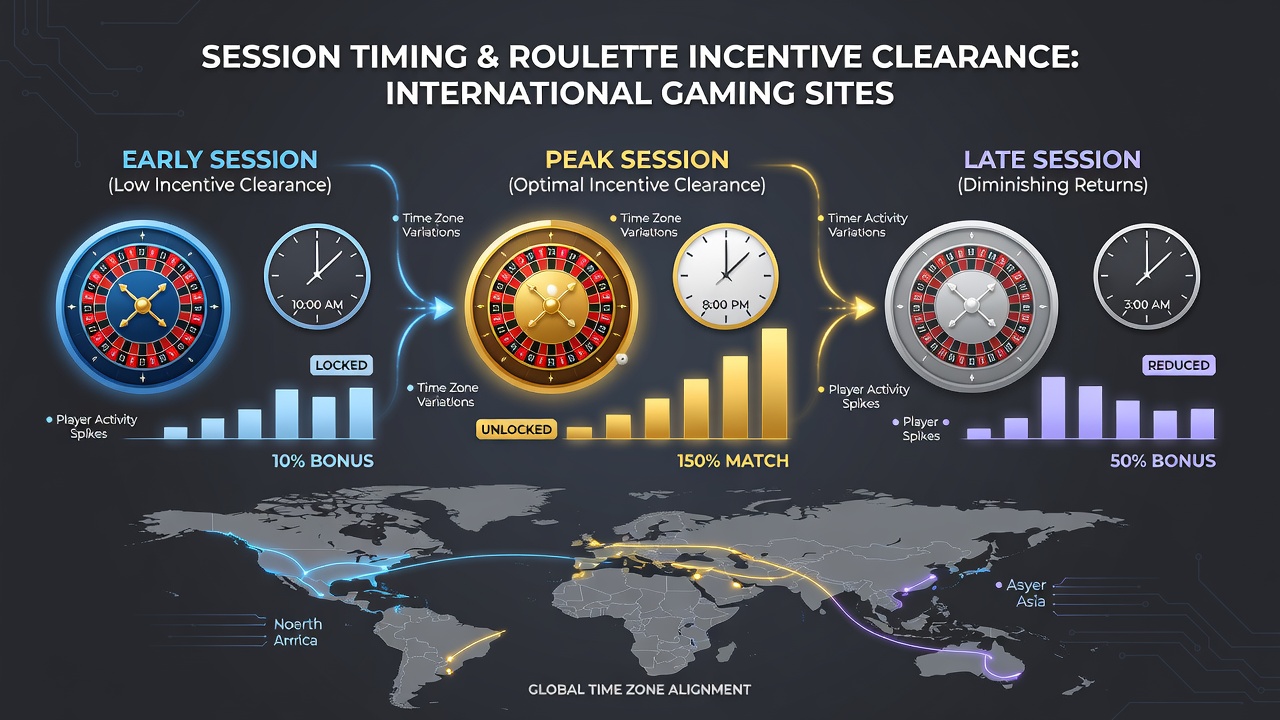
What's notable is how live dealer roulette variants, which often run on synchronized schedules with physical casino floors, introduce additional timing layers. A player joining a table during peak European hours might encounter faster spin cycles that accelerate wagering progress, while off-peak sessions in quieter Asian markets can stretch the same requirement across longer real-time durations. Industry reports from the European Gaming and Betting Association highlight that these variations contribute to measurable differences in clearance success rates when compared against RNG-only formats.
Regulatory Influences on Timing Policies
Regulatory bodies in multiple regions have tightened rules around session monitoring, and operators responded by integrating real-time dashboards that display remaining time until bonus windows close. In July 2026 several platforms introduced optional session timers that alert users when approaching thresholds, a change driven by updated guidelines from authorities in New Jersey and the Isle of Man. These tools allow players to adjust their pace without violating platform policies, and data indicates modest improvements in overall fulfillment percentages following the rollout.
Cross-border operators must reconcile conflicting time-zone rules when serving international audiences, and compliance teams routinely audit logs to confirm that incentive clearance calculations respect each jurisdiction's standards. One study released by a Canadian research consortium examined over 2 million roulette sessions and determined that alignment between player local time and server reset cycles accounted for approximately 18 percent of variance in successful bonus conversions.
Conclusion
Session timing directly shapes the pathway to incentive clearance on international roulette platforms through a combination of operator algorithms, regulatory mandates, and regional scheduling factors. Aggregated data continues to inform refinements in how bonuses are structured, and players benefit from understanding these temporal mechanics when engaging across global sites. As platforms evolve their systems in response to 2026 regulatory updates, the relationship between play duration and fulfillment outcomes remains a central metric tracked by analysts worldwide.